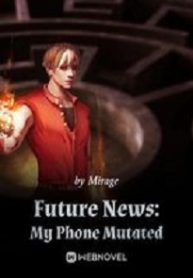
Lin Bai is not the kind of person people usually pay attention to.
His life follows a routine that would look familiar to almost anyone, work, daily responsibilities, occasional complaints about money, and the vague feeling that tomorrow will probably look a lot like today. Nothing about him suggests that he is about to become involved in anything unusual.
That changes when a strange application appears on his phone.
The app is called *Future News*, and at first it looks more ridiculous than mysterious. Most of its content resembles ordinary news reports, except for one detail that immediately stands out. The dates do not make sense.
Lin Bai’s first reaction is the same reaction most people would have. He assumes it is a prank, a bug, or some strange piece of software somebody accidentally released. Then a report inside the app begins matching reality a little too closely.
After that, ignoring it becomes difficult.
The reports cover all kinds of things. Some are insignificant enough that nobody would care about them. Others involve events that attract far more attention. What bothers Lin Bai is not the information itself, but the fact that it keeps appearing before it should exist.
Naturally, he starts paying closer attention.
At first, curiosity is the main reason. Anyone in his position would probably do the same. Yet the more he observes, the harder it becomes to stay on the sidelines. Knowing that something is likely to happen creates a temptation that is surprisingly difficult to resist, especially when that knowledge seems capable of changing the outcome.
The situation becomes even stranger once Lin Bai realizes that future headlines are not always fixed.
Sometimes small details shift. Sometimes an outcome changes. Occasionally an article that existed before no longer appears at all.
That discovery leaves him with an uncomfortable question.
If the future can be altered, how much of it should be altered?
What starts as an unusual app gradually becomes a source of opportunities, risks, and decisions that nobody should realistically have to make. The further Lin Bai gets involved, the more he finds himself navigating a world where information has value long before anyone else realizes it exists.
The novel takes a simple idea and pushes it surprisingly far, following an ordinary man who gains access to knowledge he was never supposed to have, then learns that possessing tomorrow’s headlines is often far easier than dealing with the consequences of reading them.