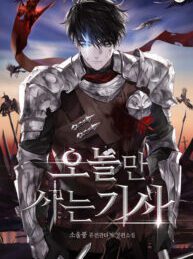
Encrid grew up in a quiet village with no famous swordsmen and no real teachers. Most kids only touched wooden swords when they were playing around. But Encrid was different. He won fights. He kept winning. And after a while, people started praising him like it meant something bigger than it probably did.
When Encrid is young, he beats older kids with a wooden sword and people start calling him a genius. It’s said casually at first, like a compliment you toss at a talented child. But the thing about those words is that they don’t always stay casual. They settle. They sink in. By the time he’s fifteen, he’s winning even against the village elder, and the praise gets louder. Even the only real “teacher” around—a crippled, third-rate mercenary who teaches the local children basic swings and stances—nods and says it too.
“Genius.”
Encrid hears it enough times that it starts to feel like a fact. Not a hope. Not a dream. A fact.
So naturally, he begins to imagine a future that matches it.
He doesn’t want to be a rich noble or some wandering monster slayer. He wants something simple, but huge: he wants to become a knight. A real one. The kind who serves a lord, stands between the weak and the blade, and maybe—if the world ever allows it—helps end the endless war chewing up the continent.
Around that time, a bard’s song spreads across taverns and roads, the kind of song that gets stuck in people’s heads whether they want it or not. It tells of the Knight of Twilight, a mythical figure fated to bring the wars to an end. The lyrics are dramatic, the prophecy is vague, and it’s exactly the sort of story that makes young men stare at the sky and think they’re destined.
Encrid listens and thinks, with complete certainty:
“That’s me.”
At eighteen, with no family left to hold him back, he leaves the village and walks straight into the mercenary world. And within weeks, reality smashes him in the face so hard he almost doesn’t understand what happened. He loses to a nameless mercenary. Not a famous veteran. Not a commander. Just some guy. The kind of person who wouldn’t even get a name in a story. The man laughs and calls him “not fully baked.”
It’s humiliating. It’s also the first honest thing anyone has ever said to him.
Encrid doesn’t quit, though. If anything, he becomes worse in a different way—obsessed. He bounces from one sword school to another, scrapes together money through dangerous work, and trains until his hands split open and his arms shake. Some of his teachers aren’t even bad people. A few are fair, even decent. But every single one ends up saying the same thing in the end.
You don’t have it.
Give up.
Encrid refuses every time.
Years pass like that. He becomes a capable mercenary, not legendary, not feared, but… solid. The kind of man people recognize after thinking for a second. “Ah, that guy. He’s decent with a sword.” It isn’t the praise he dreamed of, but it’s something.
Then, at twenty-seven, he gets hit with the kind of defeat that doesn’t just hurt your body. It hits your bones. In a random encounter, he’s beaten in five exchanges by a twelve-year-old serf who’s been holding a sword for only six months. The boy is polite about it, even apologetic, and he pays for Encrid’s treatment afterward.
The wound isn’t fatal. The truth is.
Encrid isn’t a genius. He never was.
And still… he doesn’t stop.
After nearly a decade of mercenary life, he finally abandons the instability and joins the army. By thirty, he’s serving in the Kingdom of Naurilia’s Cypress Division, assigned to the infamous Four-Four Platoon, a unit packed with troublemakers and misfits. He isn’t the strongest man there—some of his own subordinates can outmatch him—but Encrid becomes a squad leader anyway, because he’s steady, experienced, and somehow able to hold broken men together.
On the morning before battle, he wakes from a restless dream that feels uncomfortably like his whole life. He talks quietly with a subordinate about effort, knights, and the stubbornness of old dreams. Encrid admits he once wanted to be a knight. He knows it’s impossible now, but the thought still clings to him like an old scar.
By evening, the order comes down: assemble.
Encrid marches into the battlefield with an old amulet from his mercenary days clenched in his hand, stepping into steel, screams, and blood—thinking this is just another day in a war that never ends.
He doesn’t know yet that this day won’t simply end with death.
Because Encrid’s real fight isn’t only against enemy armies. It’s against time itself. And once the loop begins, the ordinary swordsman will be forced to grind himself down, sharpen himself, and become something the world never expected… someone who might finally reach twilight – The Eternal Regressing Knight.