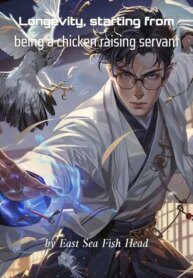
In cultivation stories, people like Wang Ba usually don’t even get a starting line. No spiritual root means no future, no matter how hard you try or how badly you want it. Wang Ba knows this early on, and not because someone kindly explained it to him, but because reality made sure he understood. He didn’t come into this world expecting to stand at the peak, but he did believe effort should count for something. Over time, that belief gets worn down piece by piece.
When Wang Ba fails the entrance requirements of the East Saint Sect, he isn’t immediately thrown out. That almost makes it worse. Instead of being rejected cleanly, he’s kept around in a role that barely qualifies as belonging. He’s assigned to raise spiritual food for the sect, which in practice means managing a chicken farm. These aren’t ordinary chickens meant for villagers. They’re raised to be eaten by immortals, and that alone sets the bar uncomfortably high.
From the outside, it looks like an easy job. From the inside, it’s exhausting and unforgiving. Wang Ba isn’t learning cultivation techniques or refining pills. He’s checking feed ratios, cleaning enclosures, watching for signs of illness, and counting heads over and over to make sure nothing goes wrong. If the supply drops, punishment follows. No excuses. The sect doesn’t care whether you’re untalented or unlucky; results are all that matter.
Years pass like this. Eight of them. No awakening. No sudden miracle. No spiritual root appearing out of nowhere. The small hope Wang Ba carried at the beginning fades into something quieter and heavier. He still does the work, but the dream that brought him to the sect feels increasingly distant, almost embarrassing to think about.
Then he stumbles across something he wasn’t meant to find—or maybe something he was. Deacon Li leaves behind a package, and inside are detailed notes about chicken breeding, along with a cultivation manual called the Body Strengthening Scripture. According to what’s written, the method offers a tiny possibility for someone without a spiritual root to develop one, if they manage to cultivate through thirteen stages.
At first, Wang Ba can’t help feeling pulled back toward hope. Even a slim chance is still a chance. But that feeling doesn’t last long. As he reads further, the truth becomes clear. The higher stages require absurd lengths of time. By the tenth stage, the years needed exceed what most immortals can even live through. The method isn’t fake, and it isn’t forbidden. It’s just cruel in its practicality.
Faced with this, Wang Ba doesn’t spiral or lash out. He does something much quieter. He stops fixating on what he can’t reach and focuses instead on what he can do. He throws himself into raising Precious Chickens, a finicky and demanding breed that doesn’t forgive mistakes. They require attention, consistency, and a strange kind of intuition that can’t be learned from manuals alone.
The work changes him, though not in ways anyone would clap for. He becomes more patient. More observant. He learns to notice patterns, small shifts in behavior, signs others would miss. There’s no dramatic breakthrough, no surge of power. Just steady progress in understanding both the animals and himself.
People like Old Sun cross his path along the way. Old Sun’s casual strength makes it obvious how wide the gap still is between Wang Ba and true cultivators. But instead of despair, those moments bring a strange kind of grounding. Wang Ba begins to understand that power doesn’t only come from talent handed to you at birth.
Longevity Begins in the Chicken Coop isn’t about flipping fate in a single moment. It’s about enduring a world that quietly decides your worth before you ever speak. It’s about continuing forward when your role is overlooked, when your labor is dismissed, and when your dreams feel unrealistic. Wang Ba doesn’t chase glory. He survives, adapts, and slowly builds something meaningful from a place no one else bothered to look.