On some quiet, almost forgettable hospital night, Fan Shen is lying there waiting. Not in a dramatic way, but in the slow, exhausting way that comes when your body gives up piece by piece. Myasthenia gravis has already taken most of his strength, leaving him barely able to move or speak, and the thought that troubles him most is that he never really lived in any meaningful way.
He wasn’t a bad person. If anything, he was too kind, the sort of person people overlook until all that remains are regrets instead of stories.
When everything finally ends, he expects nothing. Instead, he wakes up in a completely different world, able to see and move again, only to find himself surrounded by blood, chaos, and people dying around him. The shock quickly gives way to a far stranger realization: he has been reborn as a baby.
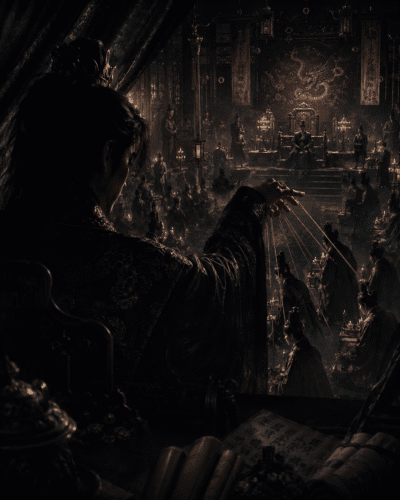
The new life he inherits is anything but peaceful. Assassins, hidden agendas, and a mysterious identity place him in danger from the moment he arrives. Given the name Fan Xian, he finds himself connected to a powerful family, although that connection offers as much risk as protection.
What makes the story interesting is that Fan Xian doesn’t instantly become an unstoppable genius. His memories from his previous life give him perspective, but they also make childhood strangely frustrating. He thinks like an adult while being trapped in a child’s body, unable to communicate what he truly knows, so he does the only thing he can—he adapts.
As he grows up away from the center of power, life occasionally feels ordinary, yet an unmistakable sense of tension lingers beneath the surface. Fan Xian often recalls stories from his old world and compares his new life to things that don’t belong in it, giving the novel a quietly unusual tone.
At its core, this is less a story about reincarnation and more about someone who spent his first life powerless finally being given a chance where every choice might matter.